


With the rise of electric bikes (ebikes) in urban environments, particularly in densely populated HDB estates, ensuring battery safety such as ebike battery tip and longevity has become a top priority for owners. Many riders wonder whether they should plug in their ebikes for a full charge every night or if there’s a smarter, safer way to manage their battery. This blog post explores essential charging habits, highlighting fire safety protocols, ways to prolong your battery’s life, and international safety standards like UL2272 and EN15194 that are especially relevant for Singaporean households. Understanding the 20%-80% rule, which suggests keeping your battery charge between these levels, can make a significant difference in not only how long your battery lasts but also in minimizing risks of overheating or fire. We’ll break down what this rule means, discuss mandatory certification standards, and share practical advice for day-to-day charging routines. Whether you’re a seasoned ebike commuter or new to electric mobility, use this guide to make informed decisions for safer, more sustainable ebike living.
Understanding Ebike Batteries: What Every Owner Should Know
Ebike batteries are at the heart of every electric bicycle, serving as the primary power source that drives the motor and ensures uninterrupted, energy-efficient rides. Most ebike batteries use lithium-ion chemistry, known for its high energy density, light weight, and rechargeability—features that make these batteries both powerful and convenient. However, this technology also requires thoughtful maintenance, as how you charge and care for your ebike battery not only influences its performance but also plays a critical role in safety, especially in dense living environments like HDB flats. Understanding the basic working principles of ebike batteries—including charge cycles, voltage regulation, and thermal management—is essential for every owner to avoid hazards and extend battery life. Charging habits matter significantly, not just for longevity but also for fire prevention. Adopting the 20%-80% rule—keeping your battery charge between 20% and 80%—is a top ebike battery tip endorsed by both manufacturers and safety authorities. This approach helps reduce battery wear and overheating risks, aligning with the heightened safety requirements in Singaporean HDBs, where fire risks from improper charging have drawn increasing concern. Strict adherence to the UL2272 and EN15194 safety standards is crucial, as these certifications confirm that your ebike and its battery have undergone rigorous testing for thermal, electrical, and fire safety. By understanding your ebike battery and committing to proper charging practices, you can enjoy both peace of mind and a healthier, longer-lasting battery.
The Fire Safety Dilemma: Why HDB Residents Must Be Extra Cautious
Living in an HDB flat brings unique fire safety considerations, especially when it comes to charging ebike batteries. In recent years, incidents of ebike-related fires have heightened concerns among residents and authorities alike. These risks are primarily due to improper charging habits, substandard batteries, and overcrowded living spaces that can accelerate the spread of fire. Fire safety is not merely a guideline in HDB environments; it is a critical responsibility, given the close proximity of families and limited evacuation options. This is why authorities strongly advocate for safe charging practices as well as strict adherence to safety-certified standards like UL2272 and EN15194, which help mitigate the likelihood of battery malfunctions and potential fire outbreaks. The urgency for caution is further amplified by the increasing prevalence of ebikes and the rise in home charging. Regularly charging an ebike battery overnight or beyond its full capacity can lead to overheating and, in some cases, fire hazards. That’s why the so-called 20%-80% rule is widely recommended: keeping your battery’s charge within this range not only prolongs battery life but also significantly reduces risks associated with overcharging. HDB residents, in particular, should ensure their ebike batteries meet certification standards and always follow manufacturer instructions. By taking these precautions and fostering a safety-first mindset, residents can greatly lower the risk of fire, making HDB living safer for everyone.
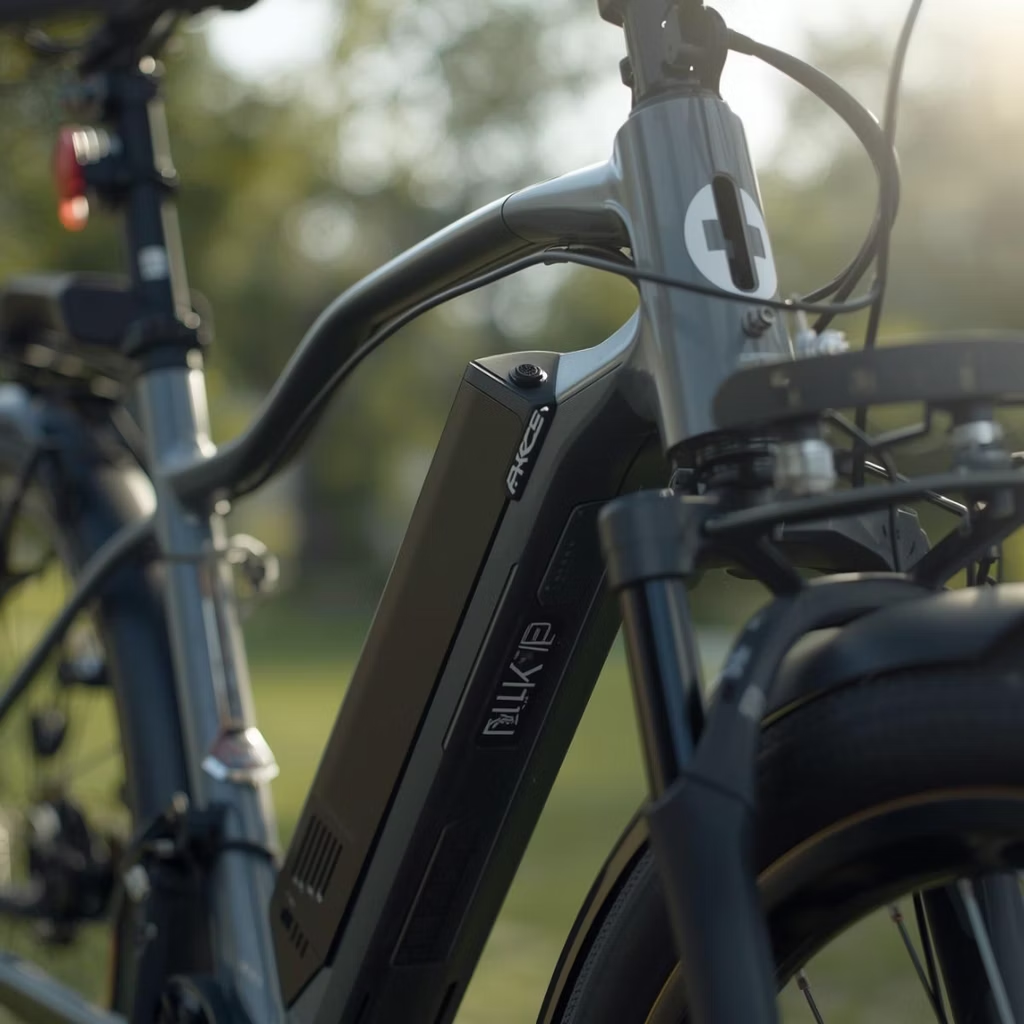
Demystifying the 20%-80% Rule: How Much Should You Really Charge?
The 20%-80% rule is an essential ebike battery tip for riders looking to balance both fire safety and battery longevity, especially for those living in HDB flats where charging standards are strictly enforced. This guideline suggests that you should avoid letting your battery deplete below 20% and also refrain from charging it beyond 80%. The reason behind this advice is rooted in the science of lithium-ion battery chemistry: both extremely low and high charge states can stress battery cells, accelerating degradation and raising potential safety concerns, such as overheating or even fire hazards. By maintaining your charge within this range, you significantly reduce the risk of dangerous thermal events, a top priority under the UL2272 and EN15194 safety standards increasingly mandated for personal mobility devices in Singapore’s residential environments. Overcharging your ebike battery or consistently running it down to very low levels doesn’t just shorten its lifespan—it also increases the risk of malfunction or catastrophic failure. With the heightened awareness of fire safety in HDB living, following the 20%-80% rule is more than just an efficiency measure; it’s a proactive safety practice. By making a habit of partial charging, you help ensure your battery remains healthy, compliant with current safety regulations, and less likely to contribute to the growing number of battery-related incidents. Ultimately, embracing this rule means you’re investing not only in the longevity and performance of your ebike but also in the safety of your home and community.
Charging Every Night: The Pros, Cons, and Safer Alternatives
Charging your ebike every night may seem like a convenient habit, especially if you rely on your bike daily. However, frequent overnight charging can come with both benefits and risks. On one hand, keeping your battery topped up ensures you’re always ready to go, potentially extending your daily commuting range and avoiding the frustration of a low battery just when you need it. On the other hand, nightly charging—especially beyond the battery’s capacity—can accelerate battery degradation and poses fire safety risks, particularly in dense urban environments like Singapore’s HDB estates. With high-profile incidents in recent years, users in 2026 have become exceptionally cautious, prioritizing safety as much as performance. This heightened awareness has brought international standards like UL2272 and EN15194 into the spotlight, ensuring that certified batteries provide an extra layer of protection against electrical faults and fire hazards. A safer alternative to charging every night is adopting smarter charging practices, such as the 20%-80% rule. Instead of depleting your battery completely or charging it to 100% each time, aim to keep the charge between 20% and 80%. This approach reduces strain on your battery’s cells, ultimately preserving its longevity and minimizing fire risk. Establishing a practical charging schedule—perhaps every two to three days or after heavier use—can further support battery health. If you must charge overnight, always do so with certified chargers in a safe, well-ventilated area, and avoid leaving the battery unattended for prolonged periods. By balancing convenience with safety guidelines, you can enjoy the benefits of your ebike while ensuring a safer living environment in compliance with UL2272 and EN15194 standards.
Standards That Matter: What UL2272 & EN15194 Mean for Your Ebike
When it comes to ensuring your ebike is both safe and reliable, understanding the significance of industry standards like UL2272 and EN15194 is crucial—especially for residents of Singapore’s HDB (Housing and Development Board) flats, where fire safety is a top priority. The UL2272 safety standard evaluates a range of critical components in personal mobility devices such as ebikes, focusing on electrical and fire hazards. EN15194, meanwhile, is a European standard specific to electric bicycles, covering not only electrical safety but also mechanical performance and durability. Together, these certifications act as an assurance that your ebike’s battery and electrical system have been rigorously tested to minimize risks, including overheating and fire—key concerns that fuel widespread caution about nightly charging habits among HDB residents in 2026. To make sure your ebike meets these high safety benchmarks, always look for UL2272 and EN15194 certification marks on the device or its documentation before making a purchase or during routine maintenance. Many retailers in Singapore now display these certifications prominently, so don’t hesitate to ask for proof or certification reports, especially if you’re buying from a lesser-known brand. If you’re maintaining your existing ebike, ensure that any replacements—like batteries or chargers—are also compliant with these standards. Staying within the 20% to 80% battery charge range, as recommended for optimal battery longevity, is a smart ebike battery tip, but it should always be paired with equipment built to UL2272 and EN15194 specifications for everyday peace of mind in shared living spaces.
Finding the Balance: Smart Charging Habits for a Safer and Longer-Lasting Ebike Battery
In summary, proper ebike battery care is not just about convenience, but also about ensuring your safety and maximizing the life span of your investment. By avoiding nightly full charges when unnecessary, following the 20%-80% charge guideline, and understanding both UL2272 and EN15194 safety standards, you significantly reduce the risk of fire incidents—especially crucial for HDB residents living in close quarters. These small but impactful habits protect your home, loved ones, and community, while also optimizing the long-term performance of your ebike. Implementing these battery care tips may require a minor shift in your nightly routine, but the benefits far outweigh the effort. Stay informed, always charge your ebike in a safe area away from combustibles, and invest in certified charging equipment. With mindful charging practices, you can enjoy all the freedom and efficiency of ebike ownership, while prioritizing both safety and sustainability in your day-to-day life.
Is it bad for the ebike battery if I sometimes let it go to 10% before charging, or will this cause a big safety issue in HDB flats?
Letting your ebike battery drop to 10% occasionally won’t cause an immediate safety issue, but making it a regular habit can reduce battery life and increase risks. For best safety and longer lifespan in HDB flats, try to keep your battery charge between 20% and 80% as much as possible.
This blog is a real eye-opener for ebike riders living in HDBs. The 20%-80% rule is practical advice—it’s not just about battery life, but also about safety in dense living areas. It’s great how the article breaks down why following UL2272 and EN15194 matters, making it simple for everyone to understand what to look for and why.
I appreciate that there’s a focus on realistic habits, like charging every two or three days instead of nightly, and keeping charging areas safe. By following these tips, ebike owners can really protect themselves and their families, while also making their batteries last longer. Good info for both new and experienced riders!
I get the safety concerns, but the 20%-80% rule feels hard to follow in real life, especially for people who use their ebike daily for work. What if I end up stranded because I try not to charge above 80%? Isn’t convenience just as important as battery health?
That’s a fair point, but for most regular commutes, staying within 80% should be enough for daily use. If you know you need more range on some days, it’s fine to charge up fully sometimes—just don’t make it every single night. It’s more about finding a balance that keeps things safe without sacrificing your needs.
Moderation sounds good but not everyone will remember or have the discipline to track battery levels so closely. Maybe more smart chargers should be available to help automate this.
If you need extra range once in a while, full charging is ok, but the rule helps most people on typical days. I set reminders to unplug just to be safe.
The blog does say you can charge more if you really need to, but for routine use, it’s safer to stick to the rule most of the time. Maybe plan your rides so you have enough left in the battery!
Planning is key, but sometimes you just forget or plans change! I wish ebikes had smarter notifications for charging.
Agree! If more ebike apps showed battery health as well as charge status, it’d be easier to follow the tips.
All these rules and certifications seem complicated to remember. Isn’t it more of a scare tactic? I’ve been charging my ebike overnight for years and never had issues. Isn’t this more about rare accidents than daily reality?
Totally get where you’re coming from. But the fire incidents, while not super common, can be really severe in places like HDB flats, so even a low risk is a big deal. It’s better to be extra careful, especially since batteries are getting more powerful nowadays.
The worst rarely happens, but if it does, it can destroy a whole flat. It only takes one accident to regret ignoring safety.
One incident can put many families at risk in HDBs. Not worth taking the chance just because it hasn’t happened to us yet.
They’re not forcing everyone to change habits overnight—I think the point is to make people aware so they don’t get complacent. Plus, more reports show battery-related fires happening recently, so the rules are here for a reason.
Yeah, people tend to react only after a big incident happens in their own block. Prevention is always better than cure.
I think it’s a culture shift. As ebikes get more popular, safety guidelines will become second nature.
Hi all, moderator here! Please remember to keep your discussion on ebike battery care, charging habits, and HDB fire safety. Share your personal experiences or questions, but let’s stay on topic to help everyone learn safe practices. Thanks for cooperating!
Thanks for reminding us—helpful to keep it focused so we don’t confuse new readers.
Appreciate the moderation! Safety is an important issue for all of us living in HDBs.
Never knew about the 20%-80% rule before, thanks for explaining why it’s so important, especially for us living in HDB flats! Got to be more careful with charging from now on.
Good reminder about UL2272 and EN15194, sometimes just grab any charger and forget the risks. Better to follow these tips than take chances with safety!