


In a rapidly advancing world, mobility aid Singapore should not be a privilege but a right accessible to everyone. Singapore, known for its commitment to inclusivity, is making significant strides in providing an empowering environment for individuals with disabilities. The e-wheelchair has emerged as a game-changing innovation, enhancing independence and mobility for its users. This blog post endeavors to share real stories of individuals who have embraced e-wheelchairs in Singapore, highlighting how this technology is paving the way for a more inclusive society and breaking down barriers that have long existed in urban landscapes. As we explore these transformative experiences, we will delve into the unique challenges faced by e-wheelchair users, the technological advancements behind these devices, and the community initiatives that support their integration into public life. Each story reflects a personal journey of resilience and adaptation, revealing the profound impact that accessible mobility solutions can have on quality of life. Join us as we celebrate the voices of those who are shaping Singapore’s accessible future, inspiring others to step forward and advocate for a world where mobility is truly universal.
Understanding E-Wheelchairs and Their Impact
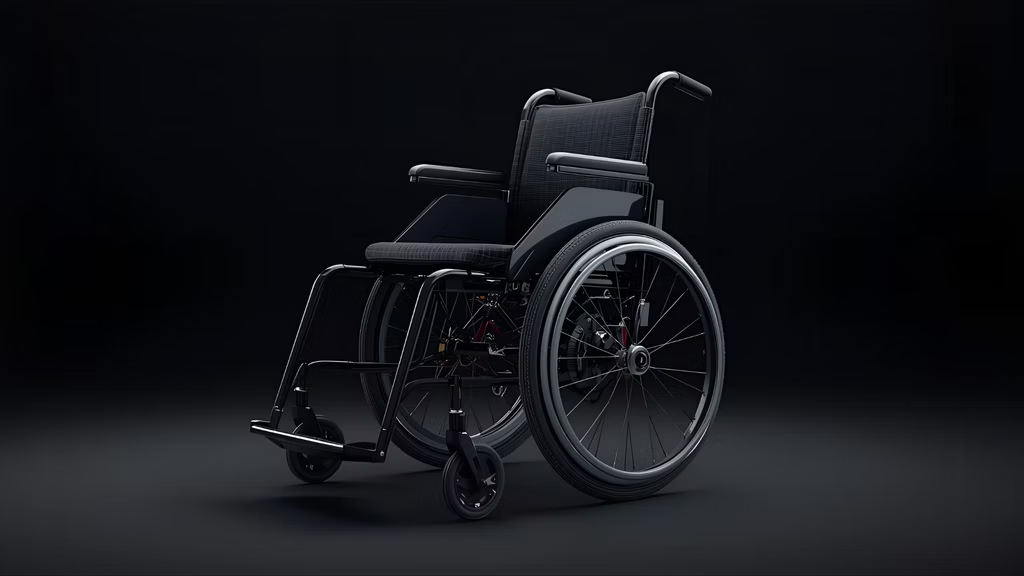
E-wheelchairs, or electric wheelchairs, represent a significant advancement in mobility aids, distinguishing themselves from traditional manual wheelchairs through their incorporation of electric motors and sophisticated technology. These features not only allow users to navigate various terrains with ease but also grant them enhanced control over their movements. For individuals with disabilities, e-wheelchairs serve as vital tools that promote greater independence and facilitate access to everyday environments, from shopping malls to parks. The automatic propulsion and adjustable settings of these devices enable users to travel longer distances without expending physical energy, significantly improving their quality of life and social participation.
In Singapore, where accessibility is a core focus, e-wheelchairs align perfectly with the nation’s vision outlined in the ‘Enabling Masterplan 2030’. This strategic initiative aims to create an inclusive society for persons with disabilities. Local users report transformative experiences, emphasizing the newfound freedom and mobility that e-wheelchairs offer. By integrating advanced technology with user-friendly design, these mobility aids not only empower individuals to navigate their surroundings with confidence but also enhance overall community engagement, making the dream of an accessible future a reality for many in Singapore.
Real Stories: Transformative Experiences of Local Users
In Singapore, the journey toward mobility empowerment has been vividly illustrated through the lives of e-wheelchair users from diverse backgrounds. Take, for instance, the story of Mei Lin, a retired teacher who has embraced her new-found freedom thanks to her e-wheelchair. Previously constrained by the limitations of a manual wheelchair, Mei Lin now navigates her neighborhood effortlessly, visiting parks, local eateries, and cultural landmarks without depending on others for assistance. Her independence has not only revived her social life but has also inspired her friends and family to advocate for better accessibility in public spaces, aligning with Singapore’s broader vision under the Enabling Masterplan 2030. These stories reflect the deeper societal shift promoting inclusivity and accessibility for all citizens, regardless of their physical abilities.
Similarly, we have stories like that of Rajesh, a university student who previously faced daily challenges on public transport. With the introduction of e-wheelchairs, Rajesh has experienced a transformative change in his educational journey. Enhanced access to public transport stations equipped with seamless entry points has allowed him to attend classes and participate in extracurricular activities without barriers. His enthusiasm and drive now serve as a testament to the difference technology can make when thoughtfully integrated into our urban landscapes. Such personal experiences highlight the profound impact that e-wheelchairs have on everyday life, underscoring their role as vital mobility aids in making Singapore a more inclusive society.
Accessibility in Public Transport: A Step Towards Inclusivity
In recent years, Singapore has made significant strides toward enhancing accessibility in public transport for individuals with mobility challenges. Efforts like the installation of ramps, tactile guidance systems, and priority seating are part of a broader strategy to ensure that everyone can navigate the city’s transport networks. The integration of e-wheelchairs into existing solutions exemplifies how technology plays a crucial role in fostering inclusivity. These mobility aids are designed to provide independence and ease of movement, aligning with Singapore’s ‘Enabling Masterplan 2030,’ which aims to create an inclusive society. As electric wheelchairs become more widely used, their compatibility with public transport systems significantly enhances the travel experience for users, promoting a seamless journey from home to various destinations across the city.
Government initiatives also play a pivotal role in achieving these accessibility goals. Policies are being implemented to advocate for barrier-free environments in public spaces, resulting in collaborations between transport operators and users. The stories of local e-wheelchair users reveal that these changes are not merely bureaucratic; they empower real lives by fostering autonomy and confidence in mobility. As public transport becomes increasingly attuned to the needs of individuals with mobility aids, Singapore’s future promises to be more inclusive and accessible for all, showcasing a city that values and supports the independence of its diverse population.
Technology and Innovation: Aligning with Singapore’s Enabling Masterplan 2030
In the quest for a more inclusive society, Singapore’s Enabling Masterplan 2030 aims to enhance the well-being of individuals with disabilities through innovative solutions. A significant facet of this initiative is the focus on technology and its role in improving mobility aids, such as e-wheelchairs. These advancements not only empower users by providing greater independence and mobility but also foster an environment where individuals can access various public amenities with ease. By integrating cutting-edge technology into e-wheelchairs, Singapore is setting a benchmark for inclusive infrastructure that supports seamless navigation throughout the city, thereby aligning perfectly with the goals of the Masterplan to create opportunities for all to thrive.
Moreover, the technological innovations that enhance e-wheelchair functionality—such as smart navigation systems, battery efficiency, and user-friendly designs—are vital for bridging gaps previously faced by wheelchair users. These advancements ensure that every member of the community can engage with urban life more actively and confidently. As e-wheelchair users share their personal stories of empowerment and ease of movement, it becomes evident that the alignment of technology with the Enabling Masterplan is not merely a strategic initiative, but a transformative journey that fosters a genuinely inclusive society where all individuals can thrive, participate, and flourish in Singapore’s dynamic landscape.
Community Support and Resources for Mobility Aid Singapore
In Singapore, community support plays a pivotal role in enhancing the lives of e-wheelchair users, fostering independence, and facilitating social inclusion. Various organizations and support groups are dedicated to providing resources that cater specifically to the needs of individuals who rely on mobility aids. From advocacy groups that champion accessibility in public spaces to local meet-ups where e-wheelchair users can connect and share experiences, the community ecosystem in Singapore actively works to break down barriers. These resources not only offer information on e-wheelchair options but also help users navigate social activities, healthcare services, and assistive technology workshops, further embedding them within society and alleviating feelings of isolation. Additionally, services such as training programs and social integration activities empower e-wheelchair users to gain confidence in navigating their environments. With initiatives aligning with Singapore’s “Enabling Masterplan 2030”, there is a collective push towards ensuring that mobility aid users can access public transportation and community amenities without hindrance. This concerted effort underscores the importance of a supportive community, proving that when individuals are equipped with both the right tools and social backing, they can truly thrive and embrace their independence amidst an inclusive urban landscape.
Challenges and Future Directions for E-Wheelchair Users
E-wheelchair users in Singapore face a myriad of challenges that hinder their mobility and independence. Societal attitudes often contribute to these barriers, as public perceptions can shape the level of acceptance and support for individuals using mobility aids. Many users report feelings of alienation in public spaces, where infrastructure and design aren’t always accommodating. Additionally, physical barriers such as uneven pavements, inaccessible public transport, and limited availability of designated paths further complicate their ability to navigate the city effectively. Addressing these issues requires a concerted effort from both the community and policymakers to foster a more inclusive environment that empowers e-wheelchair users.
Looking ahead, positive change is on the horizon. The Singapore government’s “Enabling Masterplan 2030” aims to enhance accessibility and inclusivity, paving the way for improved infrastructure and services for all. Community awareness initiatives and partnerships with local organizations play a vital role in dismantling societal misconceptions and supporting e-wheelchair users. By advocating for policy changes that prioritize accessibility, we can work towards a future where mobility aids like e-wheelchairs are integrated seamlessly into every facet of life, allowing users to thrive independently and confidently participate in society.
Towards an Accessible Future: The Promise of E-Wheelchairs in Singapore
In conclusion, the stories shared by e-wheelchair users in Singapore reflect a vital shift towards inclusivity and empowerment in the realm of mobility. These real-life narratives highlight not just the challenges faced by individuals with mobility impairments, but also their resilience and the profound impact of accessible solutions on their daily lives. As urban landscapes evolve and technology continues to advance, it is crucial for communities and policymakers to prioritize accessibility, ensuring that everyone can navigate their environments with dignity and independence.
Moreover, the journey towards a more accessible future doesn’t stop with individual stories; it requires a collective effort from all sectors of society. By supporting innovation in mobility solutions, advocating for policy changes, and fostering a culture of inclusiveness, we can create an environment where everyone, regardless of their mobility status, can thrive. Each step taken toward greater accessibility not only enriches the lives of e-wheelchair users but also strengthens the social fabric of our communities, paving the way for a brighter and more inclusive future for all.
It’s truly heartwarming to see how e-wheelchairs are transforming lives in Singapore. The blog’s stories about Mei Lin and Rajesh show just how impactful accessible mobility has become, not just for individuals, but for our whole society. E-wheelchairs empower users with real independence, making previously unreachable places like parks and schools accessible. Singapore’s focus on technology, especially with the Enabling Masterplan 2030, clearly demonstrates how policy, community support, and innovation can come together to break down barriers.
I think it’s fantastic that people now have advanced technology and supportive community networks to help them thrive. It’s especially encouraging to see how community groups and government initiatives are addressing not just the physical obstacles but also social ones. These stories inspire even more inclusive change and remind us of the importance of building both infrastructure and awareness so that everyone, regardless of ability, can enjoy freedom and dignity.
While these stories are inspiring, isn’t it a bit rosy to say e-wheelchairs solve most accessibility issues? I still see many places, especially older HDBs and small coffee shops, where steps and narrow paths block entry. Technology is great, but until every space in Singapore is actually accessible, some will still be left out. Are we sure we’re not overlooking these gaps by focusing too much on tech upgrades?
You’re right, not every place is perfect yet, and there’s a lot of work to do. But e-wheelchairs and tech still make daily life more independent for many, even if it’s not 100% everywhere. If we keep pushing for upgrades and awareness, I believe more barriers will slowly come down.
Progress is progress, but for someone who still can’t enter their neighbourhood kopitiam, it feels far away. It’s good to celebrate, but don’t let it distract us from fighting for practical changes in older places too.
True, tech has helped many, but maybe the government should offer more grants for upgrading old areas instead of just new tech. Everyone needs to benefit, not just people living near fancy malls.
But Mei Chen has a point. If older estates are still hard to access, doesn’t that mean we’re only halfway there?
This blog beautifully highlights how e-wheelchairs are genuinely transforming lives in Singapore! It’s inspiring to read about people like Mei Lin and Rajesh, who have found newfound independence and confidence thanks to these advances. The technology is not just making travel easier, but truly allowing users to reconnect with their communities and regain control over their daily lives.
What’s great is that Singapore is clearly pushing forward with initiatives like the Enabling Masterplan 2030, showing real commitment to building an inclusive society. Coupled with improvements in public transport accessibility and community support, it feels like we’re moving towards a future where everyone has the chance to move around freely, no matter their abilities. These personal stories give hope that continued innovation and advocacy will keep breaking down even more barriers!
Stories are uplifting, but I’m a bit concerned about long-term affordability. Are e-wheelchairs and their maintenance realistically within reach for everyone who needs them? Tech is great but if it’s too expensive or if servicing is slow, a lot of people may still feel left out.
That’s a fair concern, Ramesh. Costs have come down in recent years, and there are now more grants and subsidies available from agencies and charities. Plus, with community repair networks growing, it’s easier for users to get support and keep their devices working well.
Subsidies help, but sometimes you need to wait a long time for approvals or repairs. I hope there’s better communication and support so people don’t get stranded.
For low-income families, even after subsidies, it’s still a stretch. Maybe we need rental schemes or more second-hand options promoted by the government.
Also concerned about what happens if someone breaks down in a remote part of Singapore. Support hotlines are good, but it doesn’t fix the problem immediately — backup plans like loaner wheelchairs or emergency response need to improve too.
True. As more people rely on e-wheelchairs, quick and reliable roadside assistance should become a much higher priority.
It does sound promising, but don’t you think we might be overestimating how much these improvements help outside of central areas? Many older estates and offices still have steps and narrow walkways. Tech can help, but without proper infrastructure updates, how much independence is really possible for all e-wheelchair users?
You’re right, Aaron, there are still gaps, especially in older neighborhoods. But I think initiatives like Enabling Masterplan are meant to push more widespread upgrades, not just in the city center. As more people speak up and share their experiences, it’s easier to spot problem areas and push for solutions together.
I agree the Masterplan is a step forward, but progress seems slow if you don’t live near new developments. It’d be good to see more pressure from both the public and wheelchair users to speed things up. Maybe there should be more regular audits of accessibility in all neighborhoods.
Community voices are powerful, but sometimes we also need stronger government intervention. Maybe penalties for buildings that don’t comply with accessibility standards would work better.
I think more organisations should step in to bridge the gaps in older areas until the upgrades are done. Sometimes small fixes like portable ramps or local volunteers can make life much easier for those who need it now.
Good point! Maybe these community-driven solutions could inspire faster changes from authorities if they see local demand is strong.
Hi everyone, just a reminder to stay on topic about the stories, tech, and accessibility issues discussed in the blog. Personal experiences, constructive feedback, and sharing new ideas are welcome!
I wonder if there are enough training programs or workshops for new e-wheelchair users, especially for seniors who might find the tech confusing at first?
Great question! At Escooter Singapore, we provide basic training and guidance for new e-wheelchair users, and we encourage customers to join local community workshops or events. These hands-on sessions are especially helpful for seniors to build confidence and learn tips for using their devices safely in daily activities.
The progress is good, but sometimes I see places still not very wheelchair friendly, especially older buildings and some walkways. More needs to be done to close these gaps if we truly want an inclusive society.
Appreciate the focus on technology’s role in making Singapore more accessible. Sometimes, though, I still notice lifts or ramps being blocked, so I hope there will be stricter enforcement and more awareness in the future.
How do e-wheelchair users handle breakdowns or technical issues when using public transport or moving around the city?
That’s a great question, Jia Ming. Most e-wheelchairs come with support hotlines from the manufacturer or supplier, and many of our customers keep these contacts handy. At Escooter Singapore, we also offer on-site servicing and can provide advice or repairs in case of breakdowns, ensuring users aren’t stranded and can continue their journey safely.
Very inspiring to read how e-wheelchairs have changed people’s lives. I think more public education is needed so everyone in Singapore understands the challenges faced by wheelchair users and how we can help.
Reading these real stories really opens my eyes to how important it is to have accessible public spaces for everyone. I hope the government will keep improving facilities so that even more people can move around confidently.
Happy to see technology helping so many, but I agree with some comments here—older walkways still very hard for some users. Maybe residents and town councils can work together to spot and fix these spots faster.
These stories really give hope that more people with mobility challenges can enjoy daily life in Singapore. I do wish though, the help is spread out so not just city areas but all neighborhoods can be accessible.