


Table of Contents
In the world of ebikes, two popular models, the Jimove MC Pro 2.0 and the original Jimove MC Pro, have generated significant interest among users seeking to optimize their rides in terms of battery performance. With advancements in technology, the Jimove MC Pro 2.0 offers intriguing upgrades, while the original Jimove MC Pro remains a strong contender with its proven capabilities.
In this post, we’ll delve into a thorough comparison of these two models to help you decide which battery reigns supreme for your specific needs. From battery capacity and charging speed to overall performance and range, we will dissect each feature to provide you with a comprehensive understanding of what these scooters have to offer.
Whether you’re a daily commuter or a weekend adventurer, choosing the right model could enhance your journey and provide the reliability you need on the road. Join us as we embark on this detailed exploration to find the perfect battery for your ride.
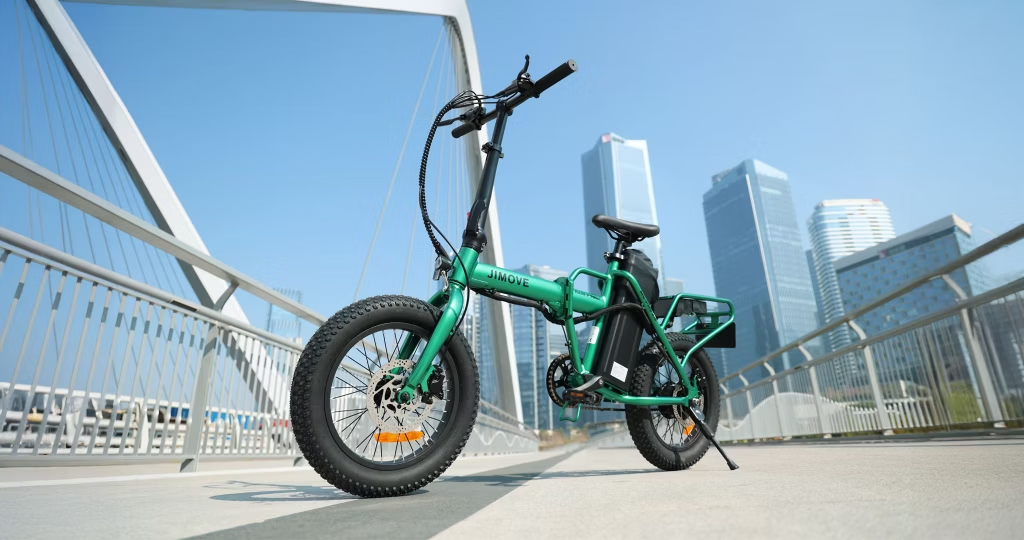
Understanding Battery Basics
Understanding the basics of battery specifications is crucial when choosing between electric bikes like the Jimove MC Pro 2.0 and the MC Pro. Key terms such as battery capacity, range, and lifecycle play a significant role in your riding experience. Battery capacity, measured in Ampere-hours (Ah), indicates how much energy the battery can store.
For instance, the Jimove MC Pro 2.0 boasts a robust capacity of 48V 15Ah, compared to the Jimove MC Pro’s 48V 12.5Ah. This difference translates to a longer range for the Jimove MC Pro 2.0, enabling riders to cover distances of 70–100 km based on terrain and riding mode, while the Jimove MC Pro allows for a range of 50–80 km. Understanding these specifications helps you make informed choices about the bike that best fits your needs, whether for commuting or leisurely rides.
Another important factor to consider is the battery lifecycle, which indicates how many charge cycles a battery can undergo before its storage capacity diminishes to 80%. The Jimove MC Pro 2.0 has an estimated lifespan of around 800–1000 cycles, while the Jimove MC Pro lasts approximately 500–800 cycles.
The MC Pro 2.0 also utilizes high-quality lithium-ion cells from reputable manufacturers like Samsung and LG, offering better longevity and reliability than the standard lithium-ion cells used in the Jimove MC Pro. Ultimately, understanding these battery basics will significantly enhance your experience and satisfaction with your ebike, allowing you to choose the right model for your riding preferences.
Detailed Specifications: A Closer Look
When evaluating the detailed specifications of the Jimove MC Pro 2.0 and the Jimove MC Pro, the differences become quite apparent, particularly in battery capacity and cell quality. The Jimove MC Pro 2.0 features a robust 48V 15Ah capacity, leveraging premium Samsung or LG lithium-ion cells, which significantly enhances its longevity and reliability. This combination allows riders to experience an estimated range of 70-100 km, depending on the terrain and riding mode.
In contrast, the Jimove MC Pro offers 48V 12.5Ah (600Wh) with unspecified standard lithium-ion cells, translating to a lower range of 50-80 km. The advanced technology in the Jimove MC Pro 2.0 not only promotes longer rides but assures a longer lifecycle of about 800-1000 charging cycles, while the Jimove MC Pro typically supports 500-800 cycles before showing signs of degradation. Thus, the choice of battery cells and overall design gives the Jimove MC Pro 2.0 a distinct edge in performance longevity.
Charging times also play a crucial role in their functionality. The Jimove MC Pro 2.0 takes approximately 5-6 hours to fully charge, thanks to it’s fast charging with safety mar which reduces the downtime for riding. Despite the increased charging duration, the removable design in both models allows riders easy access for charging and heightened security features.
Although the Jimove MC Pro is lighter at around 3.8 kg compared to the 4.5 kg of the MC Pro 2.0, riders must balance weight considerations with the necessity for extensive range and battery life, particularly if focusing on longer commutes or touring. For riders needing extended battery life and range, the Jimove MC Pro 2.0 stands out as the superior choice, while the MC Pro serves better for shorter, budget-oriented journeys.
Performance Analysis: Range and Real-World Usage
When evaluating the performance of the Jimove MC Pro 2.0 and the original Jimove MC Pro batteries, it becomes clear that range and real-world usage significantly impact the riding experience. The Jimove MC Pro 2.0 boasts a robust capacity, enabling riders to cover an impressive distance depending on various factors such as riding mode, terrain, and rider weight. In contrast, the original Jimove MC Pro, with its lower capacity, offers a more modest range.
Therefore, for those seeking longer rides, particularly in diverse environments or during extended tours, the MC Pro 2.0 is the clear winner, providing not only more distance but also the assurance of better battery longevity due to the high-quality Samsung/LG cells used in its construction. This ensures that riders can frequently engage in their adventures with confidence in the battery’s reliability and lifespan.
However, real-world usage extends beyond just numbers; it involves understanding how terrain and riding modes can impact battery performance. For example, tackling steep hills or rough trails will naturally consume more battery power, potentially reducing the range available from either model. The Jimove MC Pro 2.0’s enhanced capacity helps mitigate this impact, allowing riders to venture further even in challenging conditions.
Meanwhile, for casual riders who primarily use the bike for shorter trips or within urban environments, the standard Jimove MC Pro may still meet their needs effectively, providing a good balance of performance without the added weight of the larger battery. Ultimately, the choice between the two models hinges on the rider’s distance requirements and the nature of their journeys.
Weight and Charging Time Considerations
When considering the weight and charging time of the Jimove MC Pro 2.0 and the Jimove MC Pro batteries, riders need to weigh the trade-offs between portability and usability. The Jimove MC Pro 2.0 battery weighs approximately 4.5 kg compared to the Jimove MC Pro’s lighter 3.8 kg.
While the added weight of the Jimove MC Pro 2.0 is due to its larger capacity of 15Ah, which offers a significantly longer range of up to 100 km, the additional heft could play a role in the overall feel and handling of the bike, especially for those who prioritize lightweight gear.
For daily riders, especially those who tilt towards urban commuting or shorter excursions, this increase in weight could be seen as a factor that affects maneuverability and convenience during transport or storage.
Who Should Choose Each Battery?
When considering which battery to choose, it’s essential to align your selection with your riding style and needs. The Jimove MC Pro 2.0 battery is an excellent pick for riders who require extended range and superior performance, particularly those engaged in daily commuting or longer tours. With a capacity of 48V 15Ah, this battery can cover distances of up to 100 km, accommodating those who often find themselves on longer rides.
Its use of high-quality Samsung/LG lithium-ion cells also ensures better reliability and longevity, making it a smart investment for serious riders who prefer fewer stops for recharging and want to maximize their adventure time on the road. On the other hand, the original Jimove MC Pro battery serves as an ideal solution for shorter trips or for individuals keeping an eye on their budget.
With a slightly reduced capacity of 48V 12.5Ah, it offers a range of 50–80 km, making it suitable for urban commuting and quick errands. It is lighter, weighing approximately 3.8 kg, which can be beneficial for riders who prioritize a lighter load. While the MC Pro 2.0 might provide more energy and durability, the MC Pro remains a reliable option for those who ride less frequently or wish to limit their expenses while still enjoying the benefits of a quality ebike experience.
Choosing Your Ideal Ride: The Right Battery for You
In conclusion, the comparison between the Jimove MC Pro 2.0 and the original MC Pro highlights significant advancements in battery technology that can enhance your riding experience. The MC Pro 2.0 boasts improved efficiency, durability, and power output, making it an ideal choice for those looking for superior performance on the go.
Whether you are an occasional rider or a daily commuter, selecting the right battery can significantly impact your journey, providing you the reliability and energy you need to enjoy every ride without the worry of running out of power.
Ultimately, your choice should reflect your specific riding habits and needs. If you prioritize longer rides and faster charging capabilities, the MC Pro 2.0 is the clear frontrunner. However, if your usage is more casual and you are comfortable with the performance offered by the original MC Pro, it still remains a dependable option.
Whichever model you choose, both batteries represent quality and innovation in the world of electric rides, ensuring that you can enjoy thrilling adventures on two wheels with the confidence that your battery has your back.
| Feature | Jimove MC Pro 2.0 | Jimove MC Pro |
|---|---|---|
| Battery Capacity | 48V 15Ah | 48V 12.5Ah |
| Range (per charge) | 70–100 km | 50–80 km |
| Battery Cells | Premium Samsung / LG lithium-ion | Standard lithium-ion |
| Lifecycle (charge cycles) | 800–1000 cycles | 500–800 cycles |
| Charging Time | 5–6 hours (fast charging with safety features) | 4–5 hours |
| Weight (battery only) | ~4.5 kg | ~3.8 kg |
| Build & Durability | Double-welded, robust design | Standard build |
| Unique Features | ✅ Rainproof warranty ✅ Foldable design ✅ Longer lifespan | ✅ Lighter weight ✅ Lower cost |
| Best For | Long-distance riders, commuters, delivery use | Casual riders, budget-conscious users |
| Price Range (SGD) | $1,699 | $1,699 |
I think the MC Pro 2.0 battery is honestly a big step forward, especially for anyone doing daily commutes or longer weekend adventures. The larger 15Ah capacity and quality Samsung/LG cells not only give you more range—up to 100km—but also mean you replace the battery less frequently. Also, you get fast charging and a rainproof warranty, so it just feels more robust and dependable in our tropical climate.
For me, that extra weight is a small price to pay for double-welded durability and peace of mind that you won’t run out of juice halfway. With so many folks using ebikes for Grab or food delivery here, the longer lifespan and better build quality are huge wins. Honestly, you end up saving money in the long run by not swapping batteries so often!
The MC Pro 2.0 range might be great but isn’t it overkill unless you’re doing daily multi-trip commutes? Plus, heavier battery means harder to handle for smaller riders.
I get where you’re coming from, but some delivery riders or cyclists visiting different parts of Singapore in one day really need that 100km range. For casual use, I agree, the lighter MC Pro makes more sense.
I use MC Pro for school and errands, and lighter weight helps especially when squeezing into lifts or carrying. More than 80km per charge just feels unnecessary for me.
How big is the size difference? Sometimes the bulk gets in the way if you’re loading it into a car boot or public transport.
From what I know, it’s mostly just the battery that’s heavier, not too much bulkier. If you don’t mind the heavier lift, the size isn’t a huge problem.
Best to check specs yourself or test in-shop. Not all upgrades are worth it if portability is needed.
Hi all, this is your friendly moderator here! Just a reminder to keep the discussion focused on the comparison between the MC Pro 2.0 and MC Pro batteries, especially personal experiences with range, charging, weight, and real-world value. Please share if you’ve used both or see any long-term differences!
Thanks Tessa! I’ve tried MC Pro for basic work commutes, and range feels enough, but would love to hear more from food delivery folks who might need 2.0’s capacity.
But isn’t the extra 0.7kg kind of a big deal for daily use? If you have to carry the bike or the battery upstairs, it will get tiring fast. Also, isn’t the MC Pro 2.0 quite a bit more expensive for casual riders who don’t need the extended range?
That’s a fair point, but for daily riders, I think the added range saves hassle compared to charging every day. The price is higher but you get premium cells and longer use before needing replacement, which can offset the initial cost if you ride often.
Still, some of us just want simple rides, right? I’d rather have a lighter battery and pay less since I only ride in my neighbourhood or sometimes for kopi.
Offsetting cost is a gamble if you don’t hit high mileage. Warranty only covers certain things, not usual wear and tear, so the savings might not be as big if you keep the bike for a few years only.
Does the premium cell actually make a huge difference on Singapore roads though? Roads here are not that tough and weather is manageable—so the regular cells might still last long enough for average use.
If you only charge once every few days, yeah maybe you won’t see a downgrade quickly. But after 2 years you may still notice a difference with quality cells, especially if you do lots of short trips daily.
Would love to see real user data over 2 years! Most of my friends only use their e-bikes occasionally, so hard to justify the premium.
I feel like longer warranty is only useful if you push the battery hard. For weekend rides, I agree regular MC Pro does the job.
Thanks for breaking down the differences so clearly! I use my ebike mostly for daily commutes, so the longer range and better battery lifespan in the MC Pro 2.0 sound very appealing even if it’s a bit heavier.
Is it okay to swap between the MC Pro 2.0 battery and the regular MC Pro battery depending on my needs, or will it cause problems for the bike?
Great question, Wei Ming! While both batteries are designed for their respective models, swapping them isn’t recommended unless the bike’s system is specifically designed to support both. Using the correct battery ensures safety, protects your bike’s electronics, and maintains warranty coverage.
For my weekend rides, I actually don’t mind the regular MC Pro since it’s lighter and I don’t need so much range. Quite good to see both options laid out like this, very helpful for newbies like me.