


As the popularity of electric bicycles, or e-bikes, surges across urban landscapes, understanding the legal framework surrounding their use becomes crucial, particularly in vibrant cities like Singapore. With its compact size and efficient design, navigating the bustling streets on an e-bike can be an exhilarating experience; however, it is equally important for riders to be well-acquainted with the essential regulations in place. This blog post aims to unravel the complexities of e-bike laws in Singapore, ensuring that riders are informed and can enjoy a safe journey while adhering to the necessary laws and guidelines. From speed limits to licensing requirements and essential safety gear, we will delve into the key regulations that e-bike users must follow to avoid penalties and contribute to a safer environment for all road users. Whether you’re a seasoned e-bike enthusiast or a newcomer eager to embark on this eco-friendly mode of transport, our comprehensive guide will equip you with the knowledge needed to navigate the legal landscape and enjoy a smooth ride in Singapore’s vibrant streets.
Overview of E-Bike Laws in Singapore
In Singapore, the landscape of e-bike laws is meticulously structured to ensure that riders can enjoy their journeys safely while adhering to regulatory requirements. Central to these regulations is the distinction between e-bikes, which fall under the category of Personal Mobility Devices (PMDs), and other similar vehicles. To be legally compliant, e-bikes must meet specific criteria set by the Land Transport Authority (LTA), such as being type-approved, sealed, and registered. The laws stipulate regulations on everything from the maximum weight limit of 20 kg to the motor specifications, including a power cap of 250W and a speed restriction where motor assistance must cut off at 25 km/h. Additionally, e-bikes are required to feature a yellow registration number plate, ensuring they can be easily identified as compliant vehicles on the roads and cycling paths of Singapore. Moreover, the laws also include important rider requirements aimed at safeguarding personal safety. All e-bike riders must be a minimum of 16 years old and are mandated to wear helmets while riding. Although a riding license is not required, riders must pass a theory test to confirm their understanding of safe riding practices before they can take their e-bikes onto public paths. Compliance with these laws is not merely bureaucratic but is grounded in promoting a culture of safety on Singapore’s busy roads, with significant penalties for violations, further underscoring the city-state’s commitment to responsible and safe e-bike usage.
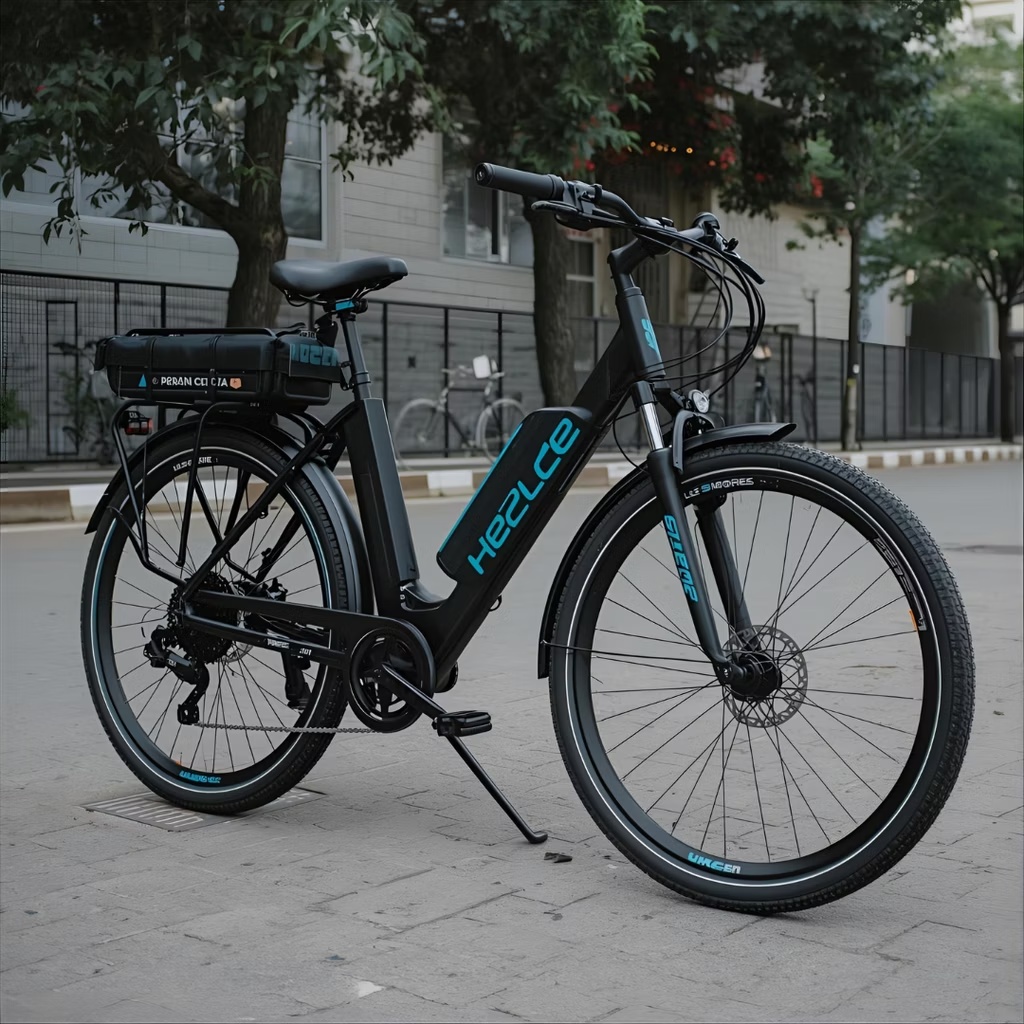
Essential Device Requirements for E-Bikes
In Singapore, e-bikes, which are categorized as Power-Assisted Bicycles (PABs), are subject to stringent device regulations aimed at ensuring safe operation on public paths. One of the fundamental requirements is that every e-bike must be type-approved, sealed, and registered with the Land Transport Authority (LTA). This is not merely a formality; the approval process involves rigorous technical checks to ensure compliance with established standards. Additionally, e-bikes are subjected to a maximum unladen weight of 20 kg and must not exceed a motor power of 250W. Riders should also note that the motor’s assistance is limited to a maximum speed of 25 km/h, and it can only be activated while pedaling, emphasizing the pedal-assist nature of these vehicles. Ensuring that your e-bike meets these specifications is essential to avoid hefty fines and penalties. It’s important for riders to recognize that the e-bike registration process also entails displaying a valid LTA registration number plate, which must be yellow with black letters. Moreover, once an e-bike has passed the mandatory LTA inspection, no modifications are allowed, as tampering is considered an offense. Familiarizing oneself with these essential device requirements not only aids in legal compliance but also enhances the overall safety of riding in Singapore. Adhering to these regulations is not just about avoiding penalties—it’s about promoting a culture of safety and responsibility in the growing community of e-bike riders.
Rider Requirements: Who Can Ride?
In Singapore, specific rider requirements are established to ensure the safety of both e-bike users and the surrounding public. Firstly, riders must be at least 16 years old to legally operate an e-bike on public paths. This age restriction is an important measure to promote maturity and responsibility among e-bike users. Additionally, it is mandatory for all riders to wear helmets while riding. This rule significantly reduces the risk of head injuries in the event of accidents, underscoring the government’s commitment to safety on the roads. Furthermore, while no specific license is required to ride an e-bike, riders must pass a mandatory theory test, which covers essential safety knowledge and best practices. This ensures that all riders are equipped with the understanding needed to navigate the paths safely and responsibly. The theory test serves as a critical component of rider education, reinforcing the importance of safe riding practices and adherence to traffic regulations. By ensuring that all e-bike riders are well-informed, Singapore aims to cultivate a safer riding environment that benefits both operators and pedestrians. In addition to adhering to these requirements, riders must also be conscious of the routes they take, as e-bikes are strictly regulated to cycling paths and roads only, thus reducing the likelihood of accidents on footpaths and expressways.
Important Usage Restrictions for E-Bikes
In Singapore, strict regulations govern the usage of e-bikes, known as Power-Assisted Bicycles (PABs), to ensure safety for both riders and pedestrians. One of the primary restrictions is that e-bikes can only be used on designated cycling paths and roads, prohibiting their use on footpaths and expressways. This means that riders must be vigilant about where they ride, maintaining adherence to the laws set forth by the Land Transport Authority (LTA). When on the road, e-bikes must travel in a designated manner—keeping to the left unless overtaking—an important regulation that helps prevent collisions and ensure a smoother flow of traffic among cyclists and motor vehicles alike. Riders are also required to wear helmets at all times in compliance with safety precautions, contributing further to the overall safety of e-biking in Singapore. Failure to comply with these usage restrictions can result in significant penalties, which can include hefty fines or jail time. The LTA has established these rules not just for the protection of e-bike riders but also to maintain public safety on the roadways. In addition to the riding restrictions, e-bikes must adhere to specific device requirements, such as weight and motor limitations, ensuring that they are safe and reliable for public use. Given the risks associated with riding e-bikes, it’s essential for users to be well-informed about these regulations and to keep their devices compliant to enjoy a safe and legal riding experience.
Registration and Inspection Procedures
To legally ride an e-bike in Singapore, prospective owners must navigate the registration process laid out by the Land Transport Authority (LTA). Registration is a prerequisite that establishes the e-bike as a compliant Power-Assisted Bicycle (PAB). This process requires that e-bikes meet specific criteria, including being type-approved, sealed, and displaying a valid LTA registration number plate. Additionally, each e-bike must pass an inspection conducted by the LTA prior to registration. This inspection ensures that the e-bike complies with regulations on weight, motor power, and operational features, such as achieving a maximum motor power of 250W and only providing assistance up to 25 km/h while engaging in pedal-assist mode. Notably, after an e-bike has been inspected, any modifications made to the device would render it non-compliant, and such tampering is subject to severe penalties under the law. Apart from the e-bike’s compliance, the owner must also meet age requirements; individuals must be at least 16 years of age to register an e-bike. E-bike riders are also mandated to wear helmets at all times to ensure safety while riding. Passing a mandatory theory test is a prerequisite for using the e-bike on public paths, even though no driving license is required. Understanding these registration and inspection procedures is crucial for any potential e-bike owner, not only to ensure their e-bike is street-legal but also to promote safe and responsible riding practices on Singapore’s roads and cycling paths.
Consequences of Non-Compliance: Understanding Penalties
The consequences of not adhering to e-bike regulations in Singapore can be severe, emphasizing the importance of compliance for both safety and legal adherence. Riders who operate unregistered or non-compliant Personal Mobility Aids (PMAs) face hefty penalties, which can include fines up to $10,000 and/or imprisonment for up to six months. This harsh penalty reflects the government’s commitment to ensuring that only safe, approved devices are used in public spaces. Similarly, neglecting to pass the mandatory theory test before riding can result in fines of up to $2,000 and potentially a six-month jail sentence. These strict regulations serve as a deterrent to prevent riders from taking shortcuts that can compromise safety and violate the law. In addition to the penalties associated with registration and testing, other violations, such as illegal modification of the e-bike, also carry serious repercussions. Modifications can lead to fines of up to $5,000 and a possible three-month imprisonment, underscoring the importance of adhering to the specifications outlined by the Land Transport Authority (LTA). Riders must understand these consequences to promote a culture of responsible riding, ultimately fostering a safer environment for all road users. Awareness of the legal landscape surrounding e-bikes not only affirms one’s commitment to compliance but also enhances the overall riding experience while reducing the risk of serious penalties.
Riding Smart: Embracing E-Bike Laws for a Safer Future
In conclusion, understanding and adhering to the e-bike regulations in Singapore is crucial for ensuring not only your safety but also that of other road users. By familiarizing yourself with key laws such as appropriate riding paths, speed limits, and safety gear requirements, you can maximize your e-biking experience while minimizing risks. Furthermore, keeping abreast of any changes in legislation will help you stay compliant and contribute to a more harmonious coexistence on the roads. Finally, as the popularity of e-bikes continues to rise, it is essential for riders to take personal responsibility for their actions. Practicing safe riding habits and promoting awareness about e-bike laws can create a more informed community. Whether you’re a seasoned e-biker or just starting out, embracing these regulations will not only enhance your own riding experience but also encourage a culture of safety for all. Happy riding!
Can I use my e-bike from overseas in Singapore if it’s not LTA approved, or do I need to get it inspected here first?
Hi Manpreet! You must have your e-bike inspected and type-approved by the LTA before using it in Singapore. Overseas models often do not meet local regulations, so please ensure it passes the inspection and registration here to avoid fines.
Wah, if kena caught not following the law, really kena big fine or even jail ah. I think the registration and inspection part very strict, but good la, at least everyone safe. Must share this with my friends who want to buy e-bike.
I think it’s really impressive how detailed Singapore’s e-bike laws are! The strict regulations on speed, weight, and helmet use show that authorities truly care about everyone’s safety, both riders and pedestrians. I also appreciate how riders must pass a theory test—it ensures that even new users know how to ride responsibly and safely.
Registering and inspecting each e-bike before riding on public paths may seem tough, but it means only compliant and safe devices are out there. This blog really helps new riders understand how to legally and safely enjoy e-biking. Riding smart with clear rules can make our roads much safer and friendlier for all!
Thanks for sharing, Melissa! But I wonder if all these rules truly make the roads safer or just create more stress for everyday riders. Sometimes the penalties feel too harsh for simple mistakes.
That’s a fair concern, Anand, but clear penalties help set boundaries so people take the laws seriously. If the consequences were too light, some might ignore the rules and cause bigger problems for everyone.
True, but not all riders make mistakes on purpose. Accidentally forgetting your helmet one day shouldn’t mean risking a $1,000 fine.
I think most people learn after one warning, maybe more education instead of harsh fines for first-time offenders would help.
Adding so many steps before you can ride also creates barriers for casual, everyday folks who just want a quick commute. Maybe the authorities could streamline the process a bit?
That’s true, Rachel. Maybe digitalizing more of these steps could make it easier—like letting people schedule inspections or theory tests online anytime.
Agree, Singapore is smart nation after all. Should be more user-friendly for both tech-savvy folks and the less digital crowd.
Honestly, I get why the laws are there, but isn’t all this a bit over the top? Having so many inspections, a special theory test, and heavy fines just to ride a bike seems intimidating for newcomers. Don’t you think such strict rules might put people off from choosing e-bikes over cars or public transport?
I get your point, Ganesh, but if the rules weren’t strict, you’d probably see a lot more accidents on the roads. Simple rules might mean convenience, but people might take shortcuts, leading to unsafe situations. At least with these checks, you know most riders are serious about safety.
But not everyone has time for multiple inspections and tests just to start cycling. It could make e-bikes less attractive when other countries are encouraging greener transport with fewer hurdles.
Also, some older folks might struggle with the online tests and registration. Isn’t there a better balance between safety and accessibility?
Strictness aside, do you think all these rules actually reduce incidents? I rarely see enforcement except during major blitzes. People just find ways around or modify their bikes quietly.
Yeah, Ivan, there might be loopholes but the heavy penalties do scare most people into following the rules. If more enforcement happens, it’ll make a real impact.
Agree, but real safety comes from community awareness, not just fear of fines. Education should be as strong as enforcement.
Hi everyone, just a quick reminder to keep the conversation focused on the topic of e-bike regulations in Singapore. Let’s share personal experiences or suggestions about compliance and road safety for fellow riders. If you have questions about specific rules, feel free to ask!
I didn’t know e-bikes have so many rules in Singapore! Good that the blog explained clearly, now I know need helmet and also must pass the theory test before riding. Thanks for breaking it down, makes me feel safer on the roads.