


UL2272 electric scooter – In recent years, electric scooters have become a popular mode of personal mobility in Singapore, offering a convenient and sustainable way to navigate the city. As their use has grown, so too have concerns about safety—particularly the risks of fire associated with non-certified devices. The Singaporean government has responded with increasingly stringent regulations to better protect riders, pedestrians, and property. At the heart of these regulations is the UL2272 certification, a key fire safety standard for personal mobility devices (PMDs) that ensures electrical and battery systems are robust against potential hazards. With significant legal changes on the horizon, understanding UL2272 certification has never been more important. By 2026, all electric scooters operating in Singapore must comply with this standard, marking a pivotal shift in how PMD safety is regulated nationwide. This blog post provides a comprehensive overview of UL2272, explains why these rules matter for current and prospective scooter owners, and breaks down what you need to know to stay on the right side of the law—and stay safe—amidst Singapore’s evolving landscape for electric personal transport.
What is UL2272? Demystifying the Certification Standard
UL2272 is a safety certification standard specifically designed for personal mobility devices, including electric scooters, to address critical concerns about fire and electrical hazards. Developed by UL (Underwriters Laboratories), a global safety science organization, UL2272 evaluates the entire electrical drive train system of these devices—including the battery, wiring, and charger—for safety defects and potential risks. The standard was created in response to numerous incidents worldwide where unsafe electric scooters caused fires or explosions, highlighting the urgent need for rigorous testing and regulation. In Singapore, UL2272 certification ensures that only devices meeting these stringent safety benchmarks can be legally used, protecting riders, households, and the public from preventable accidents. Understanding the importance of UL2272 goes beyond technical compliance; it serves as a cornerstone of rider education and public safety awareness. As part of Singapore’s robust safety measures, it is mandatory for all electric scooters used on public paths to be UL2272 certified. From June 2026 onward, retaining or using non-UL2272 devices will be considered a criminal offence, making fire safety certification not just an option but a legal requirement. By demystifying the UL2272 standard, users can make informed decisions when purchasing or operating electric scooters, ensuring that their devices are safer for everyone in densely populated urban settings. This regulatory move illustrates Singapore’s proactive stance in prioritizing fire safety and electrical integrity in the rapidly growing micro-mobility sector.
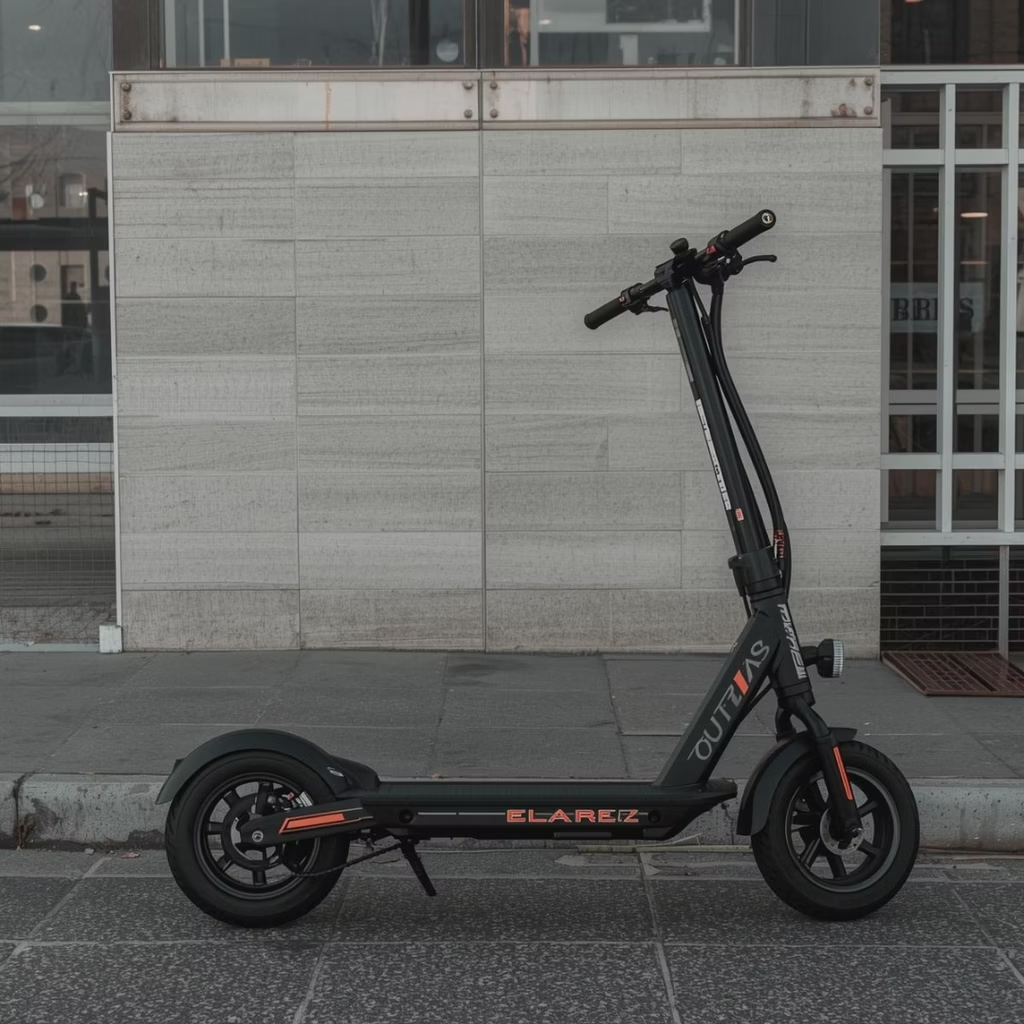
Fire Safety at the Forefront: The Risks of Non-Certified Devices
The risks associated with non-certified electric scooters are both serious and well documented, with multiple high-profile incidents of fires and explosions reported in Singapore and around the world. These incidents typically stem from poor-quality batteries, substandard wiring, or inadequate thermal management—all of which are issues that the UL2272 certification seeks to address. Without rigorous standards, electric scooters are far more likely to overheat, short-circuit, or ignite, often resulting in devastating property damage, injuries, and even fatalities. In Singapore, the Land Transport Authority (LTA) has tracked numerous cases where non-UL2272 scooters caused fires in residential areas, highlighting the dangers posed by uncertified devices in densely populated environments. The introduction of the UL2272 electric scooter standard has been a crucial step in elevating fire safety in Singapore’s personal mobility landscape. UL2272 sets strict requirements for the electrical and fire safety of these devices, covering critical elements such as battery integrity, system controls, and overall design safety. With this certification becoming mandatory, and the possession of non-UL2272 certified scooters becoming a criminal offence from June 2026, Singapore is sending a clear message: safety comes first. By enforcing these standards, the government is aiming to protect users and the public from the inherent risks posed by uncertified, hazardous devices, ensuring peace of mind for everyone who shares the city’s spaces.
Singapore’s Mandate: The Legal Landscape for E-Scooters
Singapore has consistently taken a proactive stance on the regulation of personal mobility devices (PMDs) to prioritize public safety, and electric scooters have been a particular area of focus. With increasing incidents of fires linked to uncertified devices, authorities have moved swiftly to tighten legislation. From mid-2026 onwards, it will be a criminal offence to own, keep, or use non-UL2272 electric scooters in Singapore. This marks a decisive shift from earlier years, where e-scooters could be registered and used with relatively fewer restrictions, provided that owners adhered to basic technical criteria and operational guidelines. The new legal landscape reflects a zero-tolerance attitude for non-compliant devices, underlining the government’s commitment to minimize fire risks and protect both users and the general public. The rationale for enforcing the UL2272 certification centers on fire safety. UL2272 is an internationally recognized standard that evaluates the electrical and fire safety of personal mobility devices like electric scooters, addressing common faults that can lead to potentially devastating fires. Singapore’s regulatory shift aligns with increasing concerns about battery malfunctions and charging mishaps that have resulted in injuries and property damage. By mandating UL2272 certification, authorities aim not only to eliminate substandard devices from the market but also to educate the public about the importance of using approved and certified equipment. This approach ensures residents are both legally compliant and protected from unnecessary risks, reinforcing Singapore’s reputation for rigorous public safety standards.
June 2026 and Beyond: New Laws and Their Impact
Starting from June 2026, Singapore will enforce stringent new regulations around electric scooters, particularly focusing on fire safety standards. Under these upcoming laws, it will become a criminal offence to own or even keep an electric scooter that is not UL2272-certified. This move is part of an ongoing effort to enhance public safety by ensuring that all e-scooters meet stringent fire safety requirements. The UL2272 certification, a globally recognized benchmark, specifically addresses the critical risks associated with lithium battery-powered personal mobility devices (PMDs), such as fire and electrical hazards. As June 2026 approaches, current e-scooter owners must take prompt action to either upgrade to compliant models or properly dispose of non-UL2272 devices to avoid falling afoul of the law. For existing owners of non-UL2272 electric scooters, the implications are significant. The new regulations mean that simply retaining a non-compliant device in your home or premises constitutes a criminal act, regardless of whether you intend to use it. Penalties for non-compliance are expected to be strict, potentially involving hefty fines and even prosecution. To facilitate safe transitions, educational campaigns are being rolled out to inform the public about these vital changes, highlighting both the reasons for the updated laws and the importance of fire safety certification. As a result, the landscape for electric scooter usage in Singapore will shift dramatically, with safety—as defined by UL2272 certification—now taking precedence over other considerations.
Staying Smart and Safe: Compliance Steps for Riders
As Singapore tightens regulations around electric scooters, it’s crucial for riders to take proactive steps to ensure their devices meet the UL2272 safety standards. Begin by verifying your e-scooter’s certification—look for the official UL2272 mark on the product or refer to your device’s manual and manufacturer’s website for confirmation. If your scooter is uncertified or you’re unsure, check the Land Transport Authority’s (LTA) online list of approved models. Remember that after June 2026, keeping a non-UL2272 e-scooter will be considered a criminal offence in Singapore, so acting early safeguards both your safety and compliance with the law. If your device is not UL2272-certified or is nearing the end of its lifespan, always dispose of it responsibly. Many e-waste recycling points and LTA-appointed disposal partners in Singapore accept e-scooters, ensuring safe handling of potentially hazardous batteries and components. When choosing a new e-scooter, prioritize models with demonstrated adherence to the UL2272 fire safety certification—this greatly reduces the risk of electrical fires and accidents at home and on the road. Riding smart means being informed, making responsible decisions, and staying updated with the latest regulations to protect yourself and your community from electric scooter-related incidents.
UL2272: Your Key to Safe and Lawful E-Scooter Use in Singapore
In summary, the impending 2026 regulatory changes surrounding UL2272 certification mark a significant step forward in enhancing the safety and reliability of electric scooters in Singapore. As we’ve explored, this certification is not just a regulatory checkbox but a crucial standard that reduces fire risks and promotes consumer confidence. With fire safety now front and center, both manufacturers and users are encouraged to prioritize UL2272-listed devices, aligning with the government’s proactive measures to create a safer urban environment for all. Looking ahead, e-scooter owners and prospective buyers must stay informed and ensure their devices meet the latest requirements before the new rules are fully enforced. By understanding the importance of UL2272 and preparing early for the 2026 deadline, individuals can avoid legal complications while contributing to greater road and community safety. Staying proactive, aware, and compliant will not only protect you but also drive the wider adoption of responsible mobility solutions across Singapore.
I’m really encouraged to see Singapore taking such clear action on fire safety with UL2272 certification. It’s not just about ticking boxes but genuinely keeping homes and neighborhoods safe from electrical fires. Having these strong rules sets a good example for how important safety should be, especially as more people use e-scooters every day.
The 2026 deadline also gives everyone enough time to prepare, so it’s less likely that owners will get caught off guard or have to rush. Rolling out educational campaigns and safe disposal options shows a thoughtful approach, making it easier for everyone to be responsible and law-abiding.
But Lina, don’t you think this puts a lot of stress on lower-income folks who bought older, still-working scooters? Some can’t afford to just throw them out and buy all-new models, especially if their current ride is fine. I get the safety need, but what about support for people who need it most?
That’s a fair concern, Ramesh. I think with the right support—like trade-in programs and recycling incentives—people won’t be left behind. The government and industry groups should help make the transition affordable, so safety rules don’t become a burden.
Hopefully those programs are actually easy to access, not just on paper. A lot of the time, info doesn’t get to the folks who need it most.
Yeah, support is important, but it’s even more important to make sure that battery fires don’t hurt families. I think more education campaigns would help so people know why it matters.
Also, what about enforcement? Some people might still hold on to old scooters quietly unless there’s good enforcement or strong disposal support. Will LTA be able to handle that?
LTA usually does regular spot checks and community outreach to spread awareness. I believe with this tight regulation, enforcement will be strict and people will adapt fast.
Hopefully they don’t just penalize but really help educate and transition people over. Not everyone is aware of the June 2026 changes yet.
While I get the safety drive, isn’t it possible that people might keep old scooters out of sight or sell them in the black market instead of disposing of them safely? Strict laws sometimes push behaviour underground rather than fix the issue.
That risk is possible, Yu Wen, but that’s why strong education and disposal support are so important. If people know the risks and there are proper places to get rid of banned scooters, most will choose the safer path.
True, but maybe more incentives—like small rebates or trade-ins—could encourage people to go legit instead of hiding illegal scooters. Sometimes money talks.
Agree with Lina, clear info and community outreach will help a lot instead of only punishing wrongdoers.
But some people might not care until they see strict fines or serious consequences. What happens if there’s a loophole or poor checks?
Kelvin, with heavy penalties announced and regular checks, I think most people will hesitate before taking that risk. No one wants a big fine or police trouble.
A combination of strong law and support is the best way. Really need community to work together so everyone stays safe.
Hey all, just a quick reminder from the mod team: Please keep discussion focused on the UL2272 certification and Singapore’s upcoming rules. Personal attacks or off-topic remarks will be removed. Let’s keep things respectful and useful for everyone!
If my old scooter is still working well but not UL2272 certified, will there be any program to help owners swap or recycle before the 2026 law kicks in?
Yes, as the deadline approaches, there are LTA-appointed disposal partners and e-waste programs available to help you safely recycle non-UL2272 scooters. Our team at Escooter Singapore also provides guidance and trade-in support so owners can transition smoothly to certified devices before the law takes effect.
Very detailed explanation on why UL2272 is a must for all scooters here. Honestly, I didn’t realise owning a non-certified scooter can be such a big problem after 2026. Thanks for breaking it down, it makes me feel safer knowing these rules are in place.
I like that Singapore is really putting safety first with these rules. It’s a bit troublesome to check certification, but after seeing the news about e-scooter fires, I think it’s a good move for everyone’s safety.