


Table of Contents
When it comes to navigating the rules of motorized vehicles in Singapore, understanding the difference between PMAs (Power Mobility Aids) and PMDs (Power Mobility Devices) is crucial to avoid any legal repercussions. PMAs and PMDs may seem similar at first, but they are subject to different regulations and classifications that affect how they are used and operated. In this blog post, we’ll delve into the key differences between PMAs and PMDs, and guide you on the regulations that govern these devices.
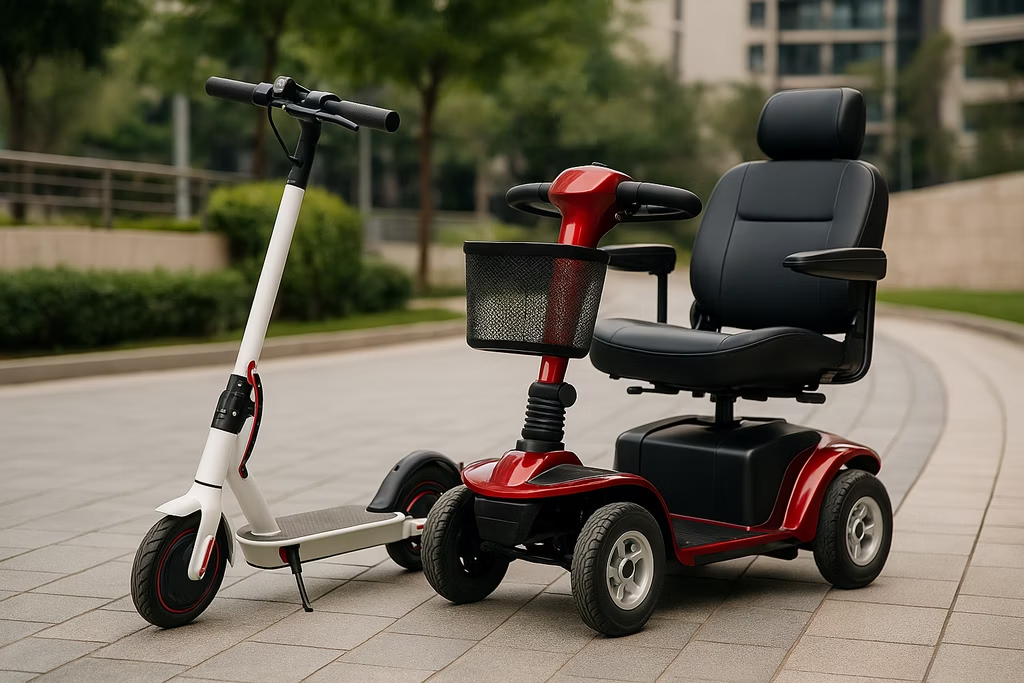
What are PMAs and PMDs?
When it comes to motorized vehicles, two main types are the PMAs and PMDs. The key differences between these two lie in their design, usage, and regulations. Most PMAs are mobility scooters that are designed to assist individuals who are unable to walk or have difficulties walking. They have three or more wheels, a footboard, and are steered by handlebars or delta tiller. On the other hand, PMDs are typically scooters with more than one seat for the rider and a pillion rider. They are certified to the UL2272 standard and registered with the Land Transport Authority (LTA).
Key Differences Between PMAs and PMDs
When it comes to navigating the rules and regulations in Singapore, it’s crucial to understand the difference between PMAs and PMDs, and the specific regulations that govern each. There are key differences between PMAs and PMDs, with PMAs have a specific design requirement of having 3 or more wheels, a footboard and can only one person can be on it, while PMDs can have more than one seat for a pillion rider and can have 1 to 3 wheels.
To be considered a PMA, the device must also be designed to carry only one individual who is unable to walk or has difficulties walking, and must only be used on pedestrian-only paths, cycling paths, shared paths and footpaths.
PMA Regulations: Speed Limitation and Mobility
PMA Regulations: Speed Limitation and Mobility PMAs, or personal mobility aids, are designed for individuals who are unable to walk or have difficulties walking. These motorized devices are subject to specific regulations, particularly with regards to speed limitation and mobility. According to the given guidelines, the maximum speed limit for PMAs is 10km/h.
This may be revised to 6km/h by the end of 2025. It is also crucial for PMAs to meet specific design requirements. They must have three or more wheels, a footboard, and be steered by handlebars or delta tiller.
Additionally, PMAs can only carry one individual and are designed for people who are unable to walk or have difficulties walking.
PMD Regulations: Registration, Safety Standards, and Riding Rules
In Singapore, PMDs must meet specific regulations to ensure road safety. According to the Land Transport Authority (LTA), certified PMDs must adhere to the UL2272 standard, which tests the battery and charger for safety risks.
All PMDs must also be registered with the LTA. When it comes to riding, PMDs can be used by anyone, but riders under 16 years old must be accompanied by an adult aged 21 or above. The maximum speed limit for PMDs is 20km/h, and they can only be ridden on cycling paths and shared paths. It is essential to note that Personal Mobility Aids (PMAs) have different regulations.
PMAs are designed for individuals with mobility issues and must meet specific requirements, such as not exceeding a speed of 10km/h (which will be revised to 6km/h by the end of 2025) and being steered by handlebars or a delta tiller. These devices can only be ridden on pedestrian-only paths, cycling paths, shared paths, and footpaths. Understanding the regulations for PMAs and PMDs is crucial to ensuring safe usage of these devices and compliance with Singapore’s laws and regulations.
Permitted Paths for PMAs and PMDs: Separation is Key
One of the main differences between PMAs and PMDs lies in the paths where they are allowed to operate. PMAs, which include mobility scooters, are restricted to pedestrian-only paths, cycling paths, shared paths, and footpaths, with a maximum speed limit of 10km/h.
On the other hand, Personal Mobility Devices, which include vehicles with more than one seat, have a higher speed limit of 20km/h and are certified to the UL2272 standard. For Personal Mobility Devices, the permitted paths only include cycling paths and shared paths. It’s essential to note that these regulations may change over time. For example, the maximum speed limit for Personal Mobility Aids is set to be revised to 6km/h by the end of 2025.
Understanding the permitted paths for both Personal Mobility Aids and Personal Mobility Devices is crucial to ensure compliance with the regulations and a safe riding experience. By being aware of these guidelines, riders can continue to navigate the rules with confidence.
Certification and Safety Standards for PMAs and PMDs
Both Personal Mobility Aids and Personal Mobility Devices have strict regulations to ensure rider safety and adherence to Singapore’s public path rules. When it comes to certification and safety standards, the key differences lie in the compliance requirements. Personal Mobility Aids must meet specified safety requirements to prevent overheating and minimize fire risks.
In 2021, the Singapore government enforced the mandatory certification of PMAs to the UL2272 standard. Certified Personal Mobility Aids prevent electrical malfunctions that may cause fires. This helps bring peace of mind to users, especially those who are vulnerable and may be unable to walk. As for Personal Mobility Devices, they must also adhere to the UL2272 standard, ensuring fire safety and preventing electrical malfunctions from occurring.
Moreover, Personal Mobility Devices are designed for multiple users, setting them apart from Personal Mobility Aids. When exploring the regulations, it is crucial to note that both Personal Mobility Aids and Personal Mobility Devices cannot be operated on certain paths, such as expressways, highways, and BKEs.
PMA vs PMD: A Comparison Chart
The primary difference between a Personal Mobility Aid and a Personal Mobility Device lies in their design, functionality, and regulatory requirements. To differentiate between Personal Mobility Aids and Personal Mobility Devices, let’s consider the key characteristics of each type of device: Personal Mobility Aids have a maximum speed of 10km/h, are designed for individuals with mobility difficulties, and can only be ridden on pedestrian-only paths, cycling paths, shared paths, and footpaths.
In contrast, Personal Mobility Devices have a higher speed limit of 20km/h, can accommodate more than one seat, and can be used by anyone. Furthermore, Personal Mobility Devices must be certified to the UL2272 standard and registered with the Land Transport Authority (LTA).
Consequences of Non-Compliance with PMA and PMD Regulations
Understanding the distinction between a Personal Mobility Aid and a Personal Mobility Device is not merely a matter of semantics—it is a critical requirement for safe and legal mobility in Singapore. The government has established clear, distinct frameworks for each device type, governing everything from their design and user eligibility to where they can be ridden and at what speed. Personal Mobility Aids are recognized as essential medical aids for those with walking difficulties, granting them access to a wider range of paths at a lower speed.
Personal Mobility Devices are subject to stricter certification and registration for safety but enjoy a higher speed limit on designated paths. Adherence to these regulations is paramount, as non-compliance carries significant financial penalties for both users and dealers. By choosing the right device for your needs and respecting the rules, you contribute to a safer and more harmonious shared path ecosystem for everyone.
PMA vs. PMD: Key Differences at a Glance
| Feature | Personal Mobility Aid | Personal Mobility Device |
|---|---|---|
| Primary Purpose | Medical aid for individuals unable to walk or with walking difficulties. | General mobility device for anyone. |
| Typical Design | 3 or more wheels, a footboard, steered by handlebars or a delta tiller. | Can have 1 to 3 wheels; may have more than one seat for a pillion rider. |
| User Eligibility | Strictly for individuals with mobility impairments. | Can be used by anyone. (Riders under 16 require adult supervision.) |
| Max Speed Limit | 10 km/h (To be revised down to 6 km/h by end of 2025). | 25 km/h. |
| Certification Standard | Must be certified to UL2272 standard for fire safety. | Must be certified to UL2272 standard and registered with the LTA. |
| Permitted Paths | Pedestrian-only paths, footpaths, cycling paths, and shared paths. | Cycling paths and shared paths only. |
| Consequences for Users | Fines up to SGD 2,000 for riding on prohibited paths (e.g., roads). | Fines of SGD 1,000 per offense for non-compliant devices or usage. |
Really appreciate how the blog makes the differences between PMAs and PMDs so clear! With the upcoming revision of speed limits and path access, it’s more important than ever for everyone to know exactly which set of rules they need to follow. The safety certification and registration process is reassuring too—it shows Singapore is serious about keeping public spaces safe for everyone.
I’ve noticed some people still use non-compliant devices or ride them on the wrong paths. Having this resource means fewer excuses for those mistakes. By sticking to these guidelines, we can all enjoy a safer, more harmonious environment whether we’re walking, riding, or simply sharing the footpaths.
Honestly, aren’t these rules a bit over the top? Reducing PMA speed to 6km/h seems too strict, especially for people who really rely on them to get around. I wonder if such tight regulations will make mobility tougher, not better.
I get your concern, but the slower speed is probably meant to keep pedestrians safe, especially on crowded paths. Most PMA users just need to get around safely, not quickly.
But walking speed is already around 5-6km/h, right? Wouldn’t making PMAs go that slow just frustrate users and maybe cause more inconvenience?
Some places overseas allow a bit higher speed without many issues. Maybe Singapore could have faster speed on wider paths instead of one rule for all.
Safety is good, but what about emergencies? If someone needs to get help quickly, a lower speed limit might be risky.
But in emergencies, people often help call ambulances or assist those in need. The speed limit is really about daily usage, not rare cases.
I still feel like the UL2272 certification is hard for older PMDs and PMAs. What happens to people who can’t afford to change to a new device just because of new rules?
LTA usually gives a grace period when new rules start, so there’s some time to switch. Maybe they could consider some financial help for those who really need it.
That would be helpful. Not everyone can just buy a new one straight away just to follow the certification update.
Good point, older folks or low-income families will struggle. Maybe the government should offer trade-in schemes or subsidies.
Agree. Trade-ins or discounts on certified models would solve some problems and increase safety too.
This is a gentle reminder to all: Please keep the discussion to the topic of PMA and PMD regulations. If you have questions about financial assistance or emergency situations specifically related to these rules, feel free to share. Off-topic or promotional comments will be removed.
Thanks for breaking down the differences so clearly! I always confuse PMA and PMD rules, now I know which one I can use on what path and the speed limit change coming soon.
If my PMA or PMD battery gets old, do I need to get it recertified to the UL2272 standard again, or just change the battery will do?
Great question! If you change the battery in your PMA or PMD, the replacement battery itself should meet UL2272 safety standards, but the entire device doesn’t need to be recertified. We always recommend using official parts and certified service partners to ensure continued compliance and safety.
Wah, never realise so strict until read this. Next time better make sure my scooter follow the new UL2272 standard and register properly, later kena fine really headache!